Lloret de Mar Beyond the Nightlife
The Costa Brava's best-known resort has a cliffside modernist garden, a medieval castle and a string of quiet coves that most visitors never find.
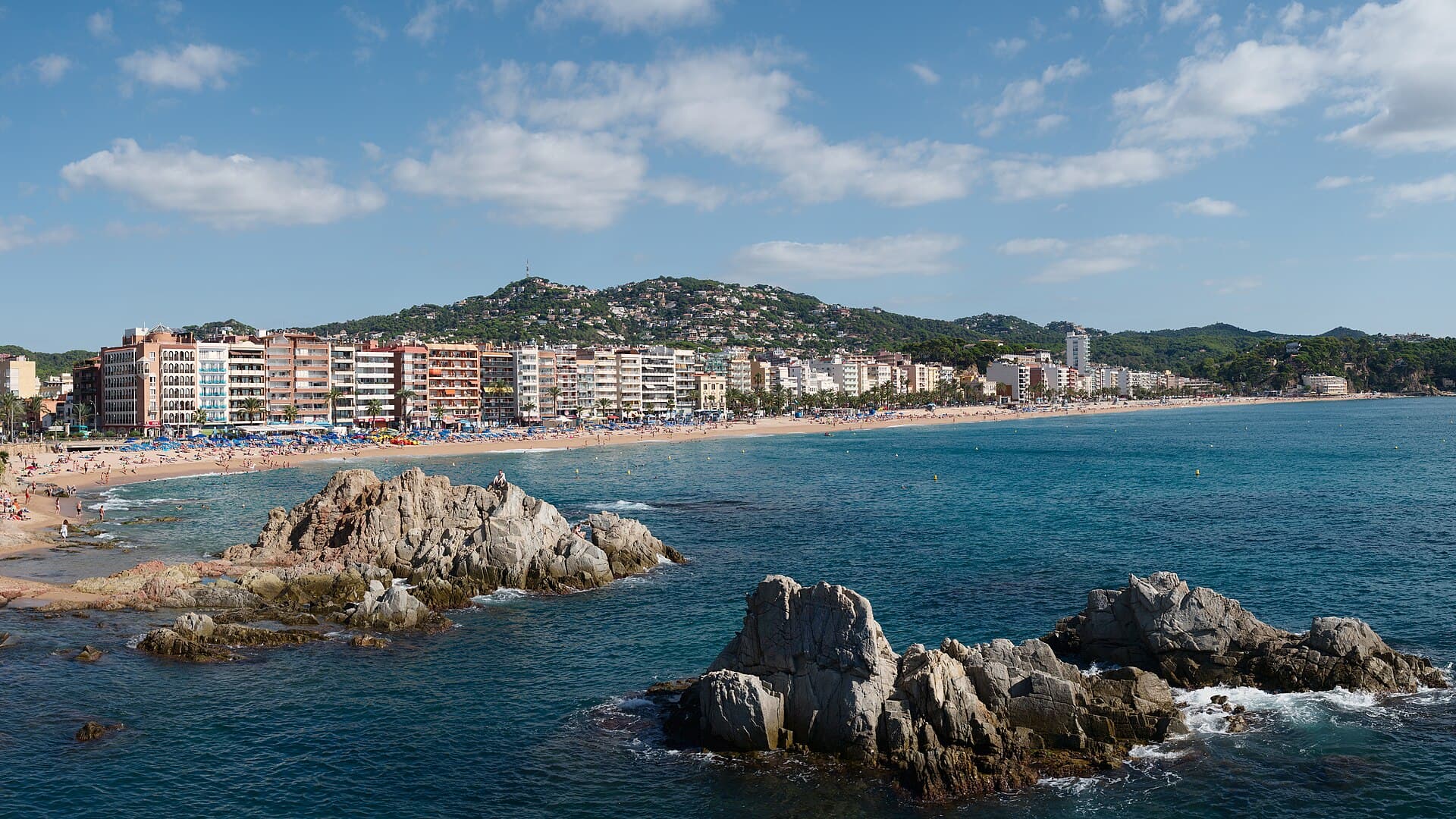
Photo: Victor Gleim · CC BY-SA 4.0 via Wikimedia Commons
Lloret de Mar has a reputation, and the reputation is not entirely unearned — the town has one of the densest concentrations of clubs and late bars anywhere on the Spanish coast, and in July and August a specific kind of visitor comes specifically for that.
What gets lost is that Lloret was a serious maritime town long before it was a resort, that it has one of the finest gardens in Catalonia, and that within a twenty-minute walk of the main beach there are coves where you can swim more or less alone. The nightlife is concentrated in a few streets. Everything else is somewhere else.
Things to do in Lloret de Mar
- Walk the clifftop Santa Clotilde Gardens in the morning light
- Follow the Camí de Ronda coast path to Cala Banys
- Climb to the Castell de Sant Joan between the two bays
- Spend the beach day at Fenals or Santa Cristina rather than the main strip
- Visit the Museu del Mar for the town's Cuba-trade history
- Kayak south along the cliffs from the main beach
The sections below take each of these in turn.
The Santa Clotilde Gardens
This is the single best reason to come to Lloret. The Jardins de Santa Clotilde were laid out in 1919 in the Italian Renaissance style, on a cliff about sixty metres above the sea, and they are one of the most complete examples of noucentista landscape design in Catalonia.
The design is deliberate: staircases, cypress avenues and stone balustrades all funnel your view toward framed openings onto the Mediterranean. It is a garden built around the sea rather than merely overlooking it. Allow an hour, and go in the morning when the light comes off the water.
Getting there
The gardens sit between Lloret and Fenals, about a twenty-five minute walk from the centre along the coast, or a very short drive. There is limited parking at the entrance.
The castle and the coastal path
Castell de Sant Joan
The eleventh-century watchtower on the headland between Lloret and Fenals beaches was built as part of the same anti-piracy defensive network that produced Tossa's walls. What survives is partly restored, but the position is the point — it looks down over both bays at once.
The Camí de Ronda
The old coastguard path runs along the cliffs and links the beaches. The section from Lloret's main beach south to Cala Banys and on toward Fenals takes under an hour and delivers you to a handful of small rocky coves along the way. This is where the town stops feeling like a resort.
Cala Banys
A rocky inlet about ten minutes from the main beach, with a terrace bar built into the cliff above it. Not a sand beach — you swim off rocks — but the water is clear and the setting is much better than anything on the main strip.
The beaches
Platja de Lloret is the long central beach, about 1.6 kilometres of coarse sand backed by the promenade. It is well equipped and, in season, extremely busy.
Platja de Fenals, the next bay south, is shorter, backed by pine woods and consistently calmer — the better option for a full day on the sand. Beyond that, Santa Cristina and Cala Treumal are smaller, prettier, and require either a walk or a short drive.
For families
Fenals and Santa Cristina are the two to aim for. Both shelve gently, both are sheltered from the prevailing wind, and neither has the through-traffic of the main beach.
The maritime history
In the nineteenth century Lloret sent a substantial share of its male population to Cuba and the Americas, and the ones who came back rich built the cemetery, the gardens and several of the grander houses. The Museu del Mar, in a restored americano house on the seafront, tells this story and is a genuinely good small museum — an hour well spent on an overcast day.
The modernist cemetery
An unlikely highlight, and one almost no visitor sees. When the americanos came home from Cuba they commissioned mausoleums from the leading modernist architects of the day, including Puig i Cadafalch, who worked alongside Gaudí on some of Barcelona's best-known buildings.
The result is a hillside cemetery full of art nouveau funerary architecture — angels, mosaics, wrought iron and sinuous stone — that would be a major attraction anywhere else. It sits above the town and is open to visitors.
For families and active days
Water World, on the edge of town, is one of the larger water parks on this coast and a reliable option on a day when the beach is too windy. The bay itself is well set up for paddleboarding and kayaking, with rental operators on the main beach, and kayaking south along the cliffs toward Cala Banys is a genuinely good way to see the coves.
About the nightlife
It is worth being straightforward: the club district is concentrated around a few streets inland from the main beach, and in July and August it is loud until roughly six in the morning. If you are staying overnight and that is not what you came for, choose accommodation in Fenals or at the southern end of the seafront rather than in the centre.
When to visit
The character of Lloret changes more between seasons than almost any other town on this coast.
June and September are the best months: warm sea, everything open, and a fraction of the crowds. July and August are peak season in every sense. From November to March a large part of the town closes down, though the gardens and the coastal paths remain, and the coast in winter has a stark quality that is worth seeing.
Getting to Lloret de Mar from Barcelona
Lloret is about 75 kilometres northeast of Barcelona, roughly 65 minutes by road on the AP-7 and C-32. Like Tossa, it has no railway station — the nearest is Blanes, and you would need a connecting bus from there.
Coaches run from Barcelona Nord bus station and take around 80 to 90 minutes plus the time to reach the station. For a group, or with luggage, a direct transfer is usually both faster and simpler.
Book your transfer to Lloret de Mar
Private, door-to-door, with a fixed price agreed before you travel. From €145 per vehicle from El Prat Airport, excluding VAT and tolls.