Cadaqués and the Dalí Coast
A whitewashed village at the end of a mountain road, the surrealist's house at Portlligat, and the raw geology of Cap de Creus.
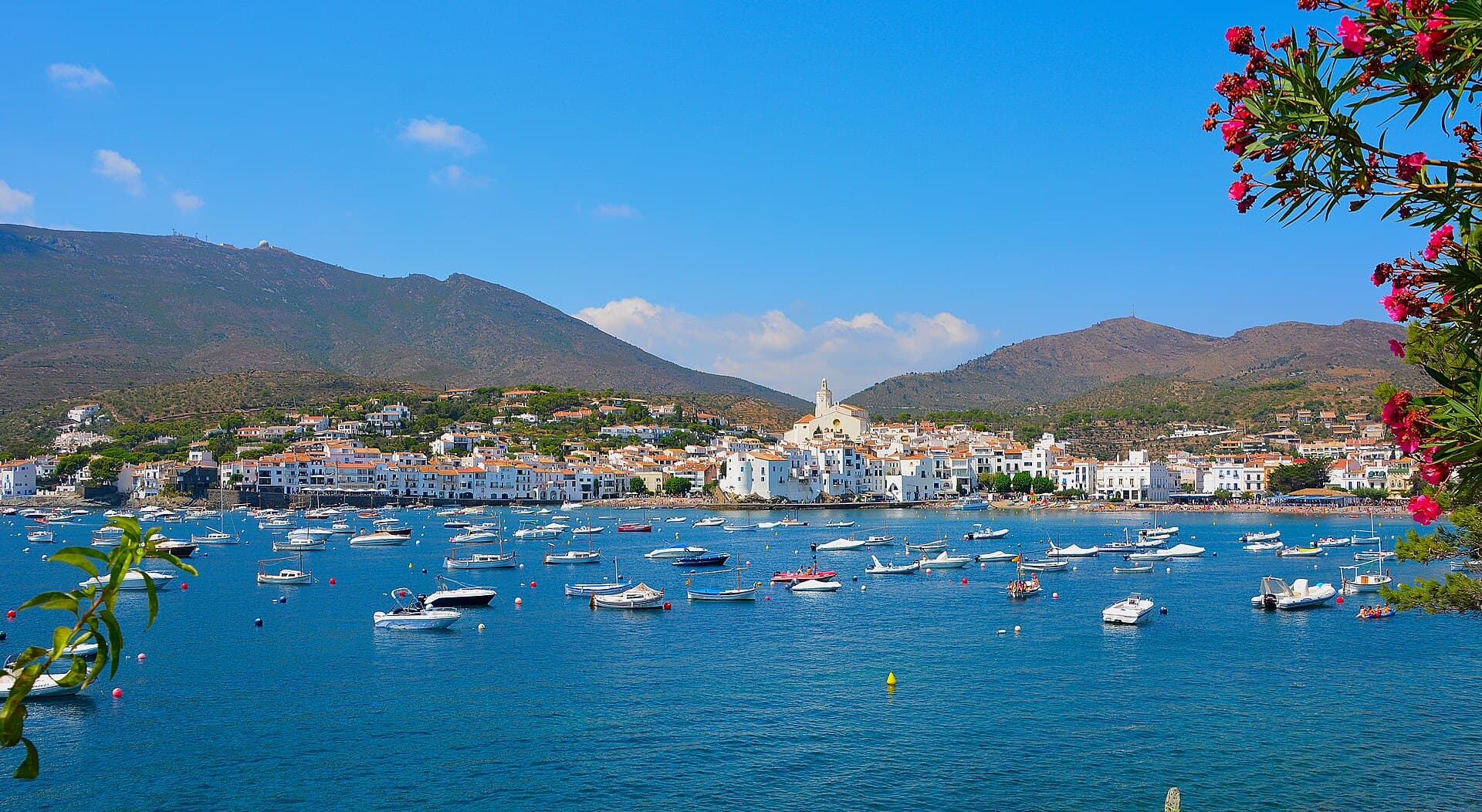
Photo: Anthiro 57 · CC BY-SA 3.0 es via Wikimedia Commons
Cadaqués is difficult to reach, and that is the whole reason it survived. The only road in crosses the Serra de Rodes on a series of switchbacks that discourage coaches and casual traffic, and the village on the other side was never developed the way the rest of the Costa Brava was. What you get is a bay ringed by white houses, black slate streets, and a light that a long line of painters came here specifically to work in.
Dalí's house at Portlligat
Salvador Dalí lived and worked in the neighbouring cove of Portlligat for most of his adult life, expanding a single fisherman's hut into a rambling connected house over four decades. It is now a museum, and it is the most revealing of the three Dalí sites in the region.
Unlike the theatrical museum at Figueres, Portlligat is domestic. You see the studio with the easel he could raise and lower through a slot in the floor, the library, the oval room built for his wife Gala, and the garden with its swimming pool and improbable ornaments. It explains the paintings better than the paintings do.
Booking ahead is essential
Entry is by timed slot with a strict limit on numbers, because the rooms are small. In summer, slots go weeks in advance. This is not a place you can turn up to and hope.
How long you need
The guided route through the house takes about fifty minutes, plus time in the garden. Portlligat itself is a fifteen-minute walk over the hill from Cadaqués, or a two-minute drive.
The village itself
Cadaqués rewards aimless walking more than a checklist. The old town rises from the waterfront in a tangle of stepped lanes paved with rastell — dark slate set on edge — up to the church of Santa Maria at the top.
The church of Santa Maria
Plain from the outside, and then you go in and find an enormous gilded baroque altarpiece filling the entire east end, wildly out of proportion to the modest building around it. It is one of the more surprising interiors on the Catalan coast.
The waterfront
The bay is lined with cafés and there is a statue of Dalí looking out over it. Swimming in the bay is possible but the beaches are small and pebbly; most people swim from the rocks or take a boat out to the coves.
Cap de Creus
The headland east of the village is the easternmost point of mainland Spain and the first natural park in Catalonia to protect both land and sea. It is geologically strange country — folded, twisted schist that has been worked by the tramuntana wind into forms that look deliberately sculpted.
Dalí said the landscape here was the direct source of the melting shapes in his work, and standing on it, that is entirely believable.
What to do there
There is a lighthouse at the tip with a restaurant beside it and parking nearby, so the headland is accessible without a serious hike. Marked trails run from the lighthouse in several directions, and even a short one gets you into landscape that feels genuinely remote.
The tramuntana
The north wind that funnels down from the Pyrenees onto this coast can be extremely strong, particularly in winter and spring. It is not dangerous but it will define your day. Check the forecast, and take a windproof layer even in warm weather.
Best light
Late afternoon, when the low sun rakes across the folded rock and the whole headland turns copper. Photographers plan whole trips around this.
Swimming and boat trips
The bay in front of the village is small and pebbly, and most swimming happens either off the rocks or at Platja Gran, the main town beach. The better water is out along the coast: a string of coves north and south of the village, most of them accessible only from the sea.
Boat operators run from the harbour in season, including trips around the Cap de Creus headland to the Cova de s'Infern and the sea caves on the far side. The kayak rental in the bay is the other good option — the coastline immediately north of Portlligat is protected, shallow and exceptionally clear.
Eating in Cadaqués
This is anchovy country. The nearby town of L'Escala is the centre of the Catalan salted-anchovy trade and the quality on menus here is a considerable step up from what the word usually implies. Order them plainly, on bread with tomato, and you will understand why they have their own designation of origin.
Beyond that: suquet de peix, the local fish and potato stew, and sea urchins in winter, which are a genuine delicacy on this stretch of coast and appear on menus from roughly December to March.
Booking a table
The village has a limited number of restaurants and a large number of summer visitors. In July and August, reserve. On the terraces overlooking the bay, reserve well ahead.
When to visit
May, June, September and early October are ideal — warm, clear, and without the August congestion on a road that genuinely cannot handle it.
Winter is a real option here in a way it is not in most Costa Brava towns. Cadaqués has a permanent population and stays open, and the combination of empty streets, hard winter light and an angry sea is memorable. Bring warm clothes for the wind.
Getting to Cadaqués from Barcelona
Cadaqués is about 170 kilometres from Barcelona: roughly two hours on the AP-7 towards Figueres, then a final thirty to forty minutes over the mountain road. There is no railway and the bus connections require a change at Figueres.
The final stretch is the reason many people choose to be driven. It is narrow, steeply banked and busy with oncoming traffic in summer, and it is far more enjoyable as a passenger than behind the wheel.
Book your transfer to Cadaques
Private, door-to-door, with a fixed price agreed before you travel. From €240 per vehicle from El Prat Airport, excluding VAT and tolls.